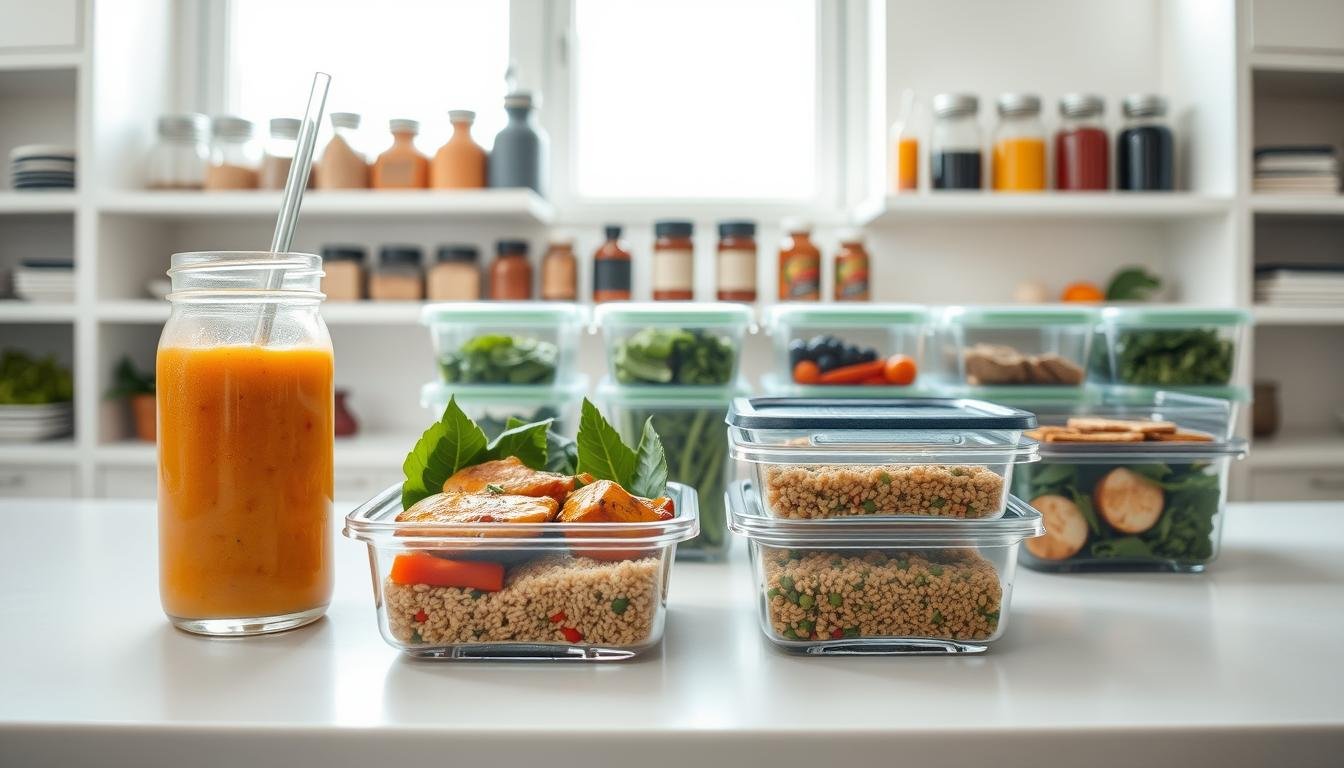
In today’s fast world, keeping a healthy eating habit is tough. But, with smart strategies, you can save time and calories and still eat well.
Meal prepping helps you eat calorie-conscious and makes your day easier. It lets you prepare your meals ahead. This way, you avoid unhealthy choices when you’re in a rush.
Key Takeaways
- Efficient meal prep saves time during the week.
- Calorie-conscious meal planning supports healthy weight management.
- Healthy eating habits are easier to maintain with meal prep.
- Meal prep allows for greater control over nutritional content.
- Time-saving meal prep strategies reduce stress.
The Benefits of Strategic Meal Prepping
Meal prepping has many benefits, like saving time and helping with calorie control and money. Spending a few hours each week on meal prep can greatly improve your life.
How Meal Prepping Saves Precious Time
Meal prepping is great for saving time. It lets you cut down on daily cooking time. This is super helpful for people with busy lives.
Calorie Control Through Planned Portions
Meal prepping helps with exact portion control. This is key for keeping calorie intake in check. It helps you stick to a healthy diet.

Financial Benefits of Meal Preparation
Meal prepping can also save you money. Buying ingredients in bulk and planning meals around sales can cut down your grocery bills. It also reduces food waste, saving you even more.
Reducing Decision Fatigue Around Food Choices
Meal prepping also cuts down on decision fatigue when it comes to food. Having a meal plan and prepping ahead of time means no more daily “what to eat” stress. It makes mealtime smoother and less stressful.
Smart Planning: The Foundation of Effective Meal Prep
Smart meal planning is key to effective meal prep. It helps save time, calories, and money. By spending a few hours each week planning, you can eat healthy in a structured way.
Creating a Weekly Meal Calendar
Start with a weekly meal calendar for the next seven days. Include breakfast, lunch, dinner, and snacks. Think about your week’s schedule. Plan quick meals for busy days and more detailed meals for free days.
Strategic Grocery Shopping for Meal Prep
After planning your meals, make a grocery list for each meal. Strategic grocery shopping means buying in bulk and choosing seasonal produce. It saves money and ensures you get the nutrients you need.
Balancing Macronutrients for Optimal Health
It’s important to balance macronutrients in your meals. Aim for proteins, healthy fats, and complex carbs in each meal. This keeps you full and satisfied. Here’s a guide for macronutrient distribution.
| Macronutrient | Recommended Daily Intake | Example Foods |
|---|---|---|
| Protein | 15-20% of total calories | Chicken, fish, beans |
| Healthy Fats | 20-35% of total calories | Nuts, seeds, avocados |
| Complex Carbohydrates | 45-65% of total calories | Whole grains, fruits, vegetables |
Adapting Meal Plans for Different Dietary Needs
It’s crucial to adapt your meal plan for your diet. Vegetarians and vegans should focus on plant-based proteins. Those on gluten-free diets should avoid gluten. Understanding your dietary needs is key.
By using these strategies, you can enjoy a healthier diet. It will meet your nutritional needs and fit your lifestyle.
Meal Prep Tips That Save Time & Calories
Effective meal preparation needs a mix of strategy and the right tools. A few key techniques can make your meal prep faster and healthier.
Batch Cooking Fundamentals
Batch cooking is key to efficient meal prep. It means cooking big batches of ingredients or meals. This saves time and cuts down on food waste.
To start batch cooking, pick staple ingredients like rice, grains, and proteins. Set aside a day, like Sunday, for cooking and portioning meals for the week.
Time-Saving Kitchen Tools and Equipment
The right kitchen tools can cut down meal prep time. A few key appliances can make a big difference.
Multi-Cookers and Instant Pots
Multi-cookers and Instant Pots are versatile. They can slow cook, pressure cook, and even cook rice. They’re essential for batch cooking.
Food Processors and Blenders
Food processors and blenders are vital for tasks like chopping and blending. They save a lot of time and effort in food prep.
Portion Control Techniques
Portion control is key for keeping calories in check. Use measuring cups or a food scale for accurate portions. Portion control containers also help in packing and reheating meals.
Ingredient Shortcuts That Don’t Sacrifice Nutrition
While cooking from scratch is best, shortcuts are sometimes needed. Pre-washed greens, pre-cut veggies, and canned beans are good options. They don’t lose much nutritional value.
Efficient Meal Prep Workflow Strategies
Creating an efficient workflow is crucial for meal prep success. Plan your meals, make a grocery list, and organize your cooking tasks. This saves kitchen time and boosts productivity.
To improve your workflow, try these tips:
- Prepare ingredients ahead, like chopping veggies or marinating proteins.
- Use leftovers to make new meals, following a “cook once, eat twice” rule.
- Keep your kitchen tidy as you cook to avoid clutter and save time.
Storage Solutions for Meal Prep Success
Proper food storage is key for meal prep success. It keeps your meals fresh and safe to eat.
Best Containers for Different Food Types
Choosing the right containers is crucial for meal prep. Different foods need different containers to stay fresh. For example, glass containers are great for soups and sauces because they’re safe to heat.
BPA-free plastic containers are perfect for salads and snacks. They’re light and easy to carry.
Proper Refrigeration and Freezing Techniques
Knowing how to store your meals is important for food safety. Make sure your fridge is at the right temperature (below 40°F). Use shallow containers to cool foods fast.
When freezing, use airtight containers or freezer bags. This prevents freezer burn. Always label them with the date.
Food Safety Guidelines for Meal Prep
Food safety is crucial to avoid getting sick. Always wash your hands before cooking. Cook foods to the right temperature.
When reheating, make sure meals reach 165°F. This kills bacteria.
Organizing Your Refrigerator for Meal Prep Efficiency
A tidy fridge makes meal prep easier. Use baskets or bins to organize your meals. This makes it simple to find what you need.
Keep items you use often at eye level. Store raw meats on the bottom to avoid contamination.
Preventing Food Waste Through Smart Storage
Smart storage helps reduce waste by keeping meals fresh. Use the “first in, first out” rule. This ensures older meals are eaten first.
Using clear storage containers helps you see what’s inside. This reduces the chance of forgetting about stored meals.
Calorie-Conscious Recipes for Weekly Prep
Planning and preparing calorie-conscious recipes is key to meal prep. These meals should be both healthy and tasty. This way, you can keep your diet balanced all week.
Protein-Packed Breakfast Options
Begin your day with a protein-packed breakfast to stay full. Try Greek yogurt with berries and nuts, or scrambled eggs with spinach and whole-grain toast.
Nutrient-Dense Lunch Ideas
Choose nutrient-dense lunches like grilled chicken salads or quinoa bowls with roasted veggies. Whole-grain wraps with lean turkey and avocado are also great.
Satisfying Low-Calorie Dinner Recipes
Dinner can be fulfilling without being high in calories. Baked salmon with roasted sweet potatoes and green beans is a good choice. Stir-fries with lean beef, mixed veggies, and brown rice are also tasty.
Smart Snack Preparations
Healthy snacking keeps your energy up. Prepare smart snacks like carrot sticks with hummus, apple slices with almond butter, or a mix of nuts and dried fruits.
Maintaining Variety to Prevent Meal Prep Fatigue
To avoid meal prep fatigue, mix up your meals. Use different flavors and ingredients in your recipes.
Flavor Boosters That Don’t Add Calories
Use flavor boosters like herbs and spices to add taste without calories. Try basil, cilantro, cumin, and paprika.
Mix-and-Match Components for Diverse Meals
Prepare components that can be mixed and matched for different meals. Cook brown rice, roast various veggies, and grill chicken or tofu. This way, you can create diverse meals all week.
Conclusion: Building Sustainable Meal Prep Habits
Adding meal prep to your daily life can save time and help you eat healthier. It’s all about planning well, working efficiently in the kitchen, and storing food right.
By adopting sustainable meal prep habits, you can eat well, waste less food, and feel better. This article showed how to do it with batch cooking, portion control, and smart recipes.
To make meal prep a habit, start small. Pick a day for planning and shopping. As you get better, try new recipes and keep making healthy eating a fun part of your life.
FAQ
What is meal prep, and how can it help with weight loss?
Meal prep means planning, shopping, cooking, and portioning meals ahead of time. It helps with weight loss by controlling calories and avoiding unhealthy choices.
How do I start meal prepping for a healthy lifestyle?
Start by making a weekly meal calendar. Then, create a grocery list for those meals. Think about your dietary needs and likes when planning.
What are some time-saving kitchen tools for meal prep?
Essential tools include multi-cookers, food processors, and blenders. They help with chopping, cooking, and mixing, making prep faster.
How can I maintain variety in my meal prep to prevent fatigue?
Use herbs and spices to add flavor without extra calories. Try mixing different proteins, veggies, and grains to create varied meals.
What are some tips for storing meal prep effectively?
Use airtight containers for each food type. Follow safe storage and freezing methods. Organize your fridge for easy access to meals.
Can meal prep help with reducing food waste?
Yes, meal prep helps by planning meals with what you have. This way, you use up ingredients before they spoil, reducing waste.
How can I adapt meal prep for different dietary needs?
Consider your diet’s specific needs, like gluten-free or vegan. Plan meals with suitable ingredients. Ensure you meet nutritional needs by balancing macronutrients.